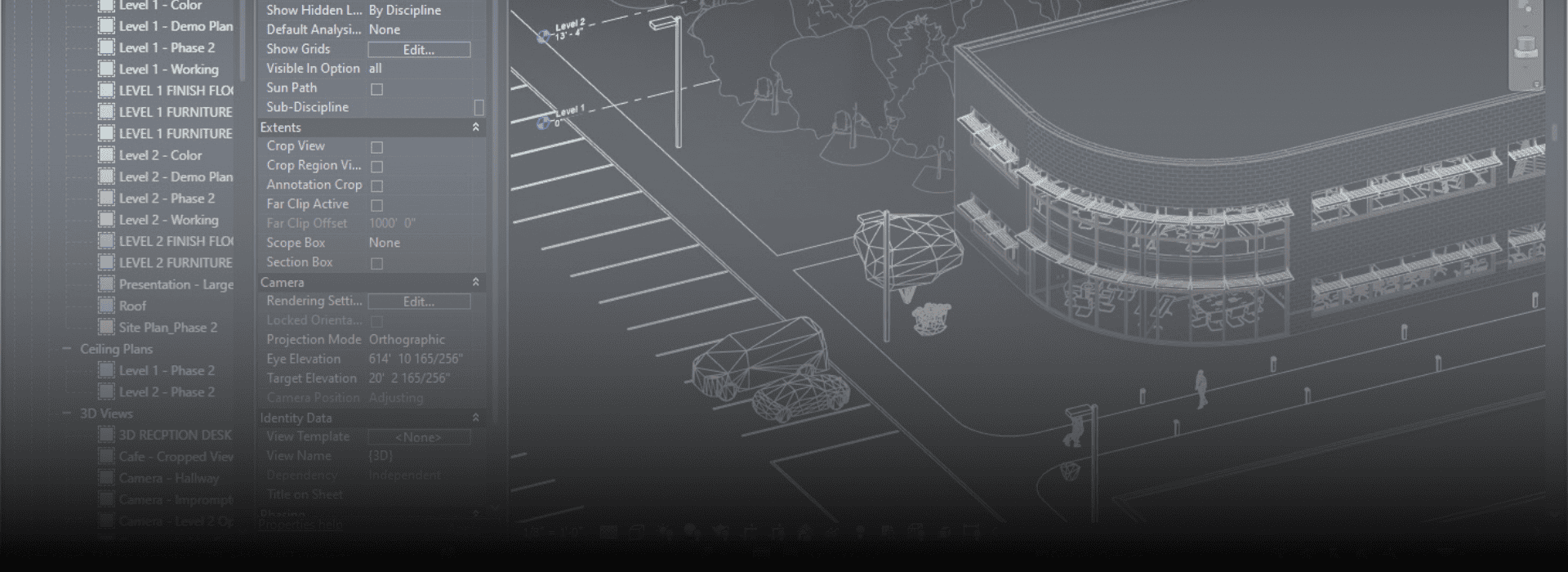
What is Revit Structure?
Revit Structure (a discipline within Autodesk Revit) is a Building Information Modeling (BIM) software specifically designed for structural engineers, designers, and detailers. It enables users to create accurate, detailed, and coordinated 3D models of structural systems, including beams, columns, foundations, trusses, reinforcements, and other structural components.
Uses and Purposes of Revit Structure
- Structural Modeling: Design and model structural frameworks in 3D including steel, concrete, wood, and rebar.
- Analysis Integration: Interoperates with structural analysis tools (like Robot Structural Analysis, STAAD Pro) to test load-bearing performance.
- Detailed Documentation: Automatically generates structural drawings, schedules, and documentation directly from the model.
- Coordination & Collaboration: Enables seamless collaboration among architects, MEP engineers, and structural designers using a single shared BIM model.
- Construction Planning: Supports construction sequencing, cost estimation, and fabrication-ready modeling.
From intricate landscapes to 6D mechanical plans, Revit Structure offers the high-level accuracy required for innovative projects. Master these essential BIM tools by visiting our Courses page and starting your professional journey today.
Benefits and Advantages of Revit Structure
Feature | Advantage |
| BIM Workflow | Ensures accuracy and reduces rework by maintaining one central model |
| Automation | Auto-generates drawings, schedules, and material takeoffs |
| Clash Detection | Identifies interferences early between structural and other systems |
| Real-time Updates | Changes to models reflect instantly in all drawings and documentation |
| Parametric Design | Easily modify components using parameters (dimensions, materials, etc.) |
| Industry Collaboration | Enhances teamwork across disciplines (architectural, MEP, structural) |
| Sustainable Design | Helps evaluate material efficiency and environmental impact |
How Revit Structure Helps Engineering Candidates
- Industry-Relevant Skills: Prepares candidates for roles in BIM-driven construction and design firms.
- Enhanced Employability: Companies value Revit proficiency for fast-paced, model-based structural work.
- Project Experience: Enables students to create complete structural project portfolios.
- Knowledge of International Standards: Revit supports global design codes and templates.
- Better Understanding: Helps engineering students visualize loads, materials, and structural behaviors in 3D.
Job Titles after Learning Revit Structure software
Role | Typical Responsibilities |
| Structural BIM Modeler | Develop 3D models for structural components and detailing |
| Structural Draftsman | Prepare 2D/3D drawings, fabrication layouts, and schedules |
| BIM Coordinator (Structural) | Coordinate structural models with architectural and MEP models |
| Structural Engineer (Revit) | Design and analyze structures using Revit and linked analysis tools |
| BIM Technician | Support BIM execution plans and documentation |
| Revit Technician – Structures | Handle drafting, model updates, and coordination within structural discipline |
| Design Engineer (Structural BIM) | Design structural elements and ensure model accuracy and code compliance |
| Construction Document Specialist | Create construction-ready documents and shop drawings using BIM |