Building a Career Beyond the Site/Construction: Moving into Design Engineering in Oil & Gas: Opportunities, Challenges, and Career Impact
Introduction
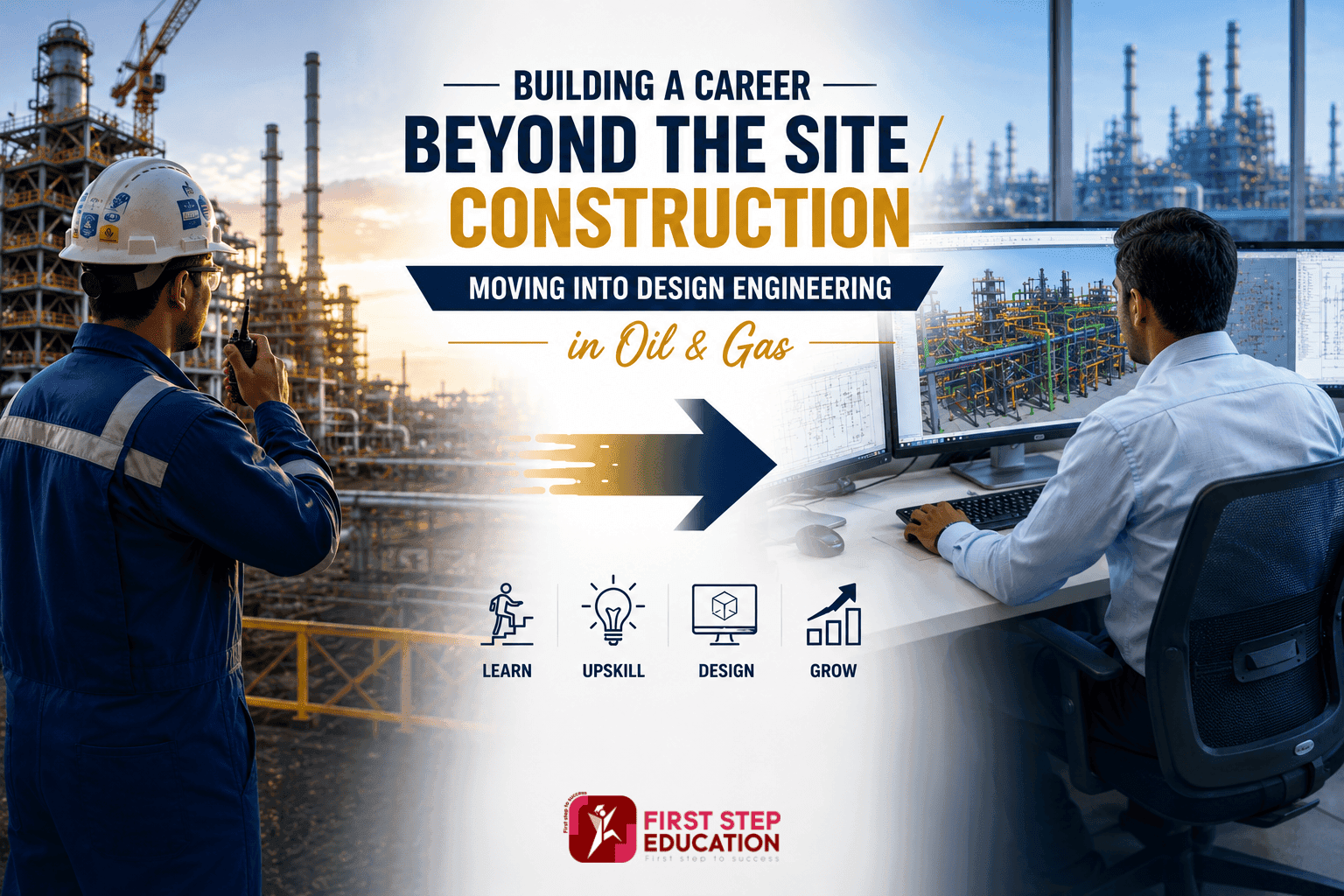
Many professionals in the oil and gas industry begin their careers in site-based roles such as construction supervision, commissioning, operations, maintenance, inspection, or project execution. As their careers progress, some consider moving into design engineering positions for better work-life balance, long-term career sustainability, technical specialization, or broader career opportunities.
While transitioning from a site role to a design role can be highly rewarding, it requires careful planning, additional technical development, and an understanding of how the change may affect future career growth. This article explores the advantages, challenges, career implications, and key considerations involved in making this transition.
Understanding the Difference between Site and Design Roles
Before making the switch, it is important to understand how the two career paths differ
Site-Based Roles
Site professionals are responsible for:
- Construction supervision
- Installation activities
- Commissioning and start-up
- Operations and maintenance
- Quality control and inspection
- Contractor coordination
- Troubleshooting field issues
The work environment is dynamic, practical, and execution-oriented. Professionals develop strong problem-solving abilities and gain firsthand exposure to equipment, systems, and operational challenges.
Design Engineering Roles
Design engineers focus on:
- Engineering calculations
- Equipment selection
- System design
- Technical documentation
- Engineering studies
- Design reviews
- Compliance with international codes and standards
The work is more analytical and office-based, requiring a strong understanding of engineering principles, software tools, and design methodologies.
Why Professionals Move from Site to Design
Several factors motivate professionals to make this transition:
1. Better Work-Life Balance
Design roles generally involve fixed working hours and less travel compared to site assignments. This can provide greater personal stability and family time.
2. Long-Term Career Sustainability
Site work often becomes physically demanding over time, especially in remote locations, offshore facilities, or harsh environmental conditions. Design engineering offers a career path that remains viable throughout one's professional life.
3. Technical Specialization
Design positions allow engineers to become specialists in areas such as:
- Piping Design
- Process Engineering
- Mechanical Design
- Electrical Engineering
- Instrumentation and Control
- Structural Engineering
Specialization often increases long-term market value.
4. Global Career Opportunities
Engineering design skills are transferable across projects and countries. Many international engineering consulting companies actively recruit experienced design professionals.
How the Career Change May Affect Your Future
Positive Effects
Enhanced Technical Expertise
Design roles deepen your understanding of engineering principles, standards, calculations, and system integration.
Better Understanding of Complete Project Life Cycle
Professionals who possess both site and design experience are highly valued because they understand:
- Design intent
- Construction challenges
- Commissioning requirements
- Operational constraints
This combination often creates strong project engineers and engineering managers.
Increased Career Flexibility
You may eventually move into:
- Lead Engineer roles
- Engineering Management
- Project Engineering
- Technical Consulting
- Project Management
Higher Long-Term Employability
Many organizations seek engineers who can bridge the gap between design offices and construction sites.
Potential Negative Effects
Temporary Salary Adjustment
Depending on your experience level, some organizations may offer a lower position or compensation package during the transition phase.
Learning Curve
You may initially feel less confident because design engineering involves:
- Detailed calculations
- Engineering software
- Industry standards
- Design documentation
This can create a temporary reduction in productivity until you gain experience.
Loss of Field Exposure
Over time, some design professionals lose familiarity with actual field conditions if they remain exclusively office-based.
Will the Transition Be Difficult?
The difficulty depends on several factors.
It Will Be Easier If:
- You have strong engineering fundamentals.
- You regularly interact with engineering drawings.
- You participate in design reviews.
- You understand equipment and system operation.
- You have experience interpreting technical documents.
It Will Be More Challenging If:
- Your experience has been entirely execution-focused.
- You have limited exposure to engineering calculations.
- You are unfamiliar with engineering software.
- You have never worked with design standards and codes.
For most professionals, the first six to twelve months involve significant learning and adaptation.
However, site experience often provides practical insights that many design engineers lack. This practical knowledge becomes a major advantage once the transition is complete.
Key Skills You Need to Develop
Technical Skills
Depending on your discipline, focus on:
Mechanical Engineers
- Pressure vessel design
- Static and rotating equipment
- ASME standards
- Mechanical calculations
Piping Engineers
- Pipe stress analysis
- Piping layouts
- Material specifications
- Piping codes
Process Engineers
- Process simulation
- Heat and mass balance
- Process safety
- Process optimization
Electrical Engineers
- Load calculations
- Power system studies
- Protection systems
- Electrical design software
Instrumentation Engineers
- Control philosophy
- Instrument selection
- Loop diagrams
- Safety instrumented systems
Software Skills
Common software tools include:
- AutoCAD
- MicroStation
- SmartPlant
- AVEVA E3D
- PDMS
- CAESAR II
- HYSYS
- Aspen Plus
- ETAP
- STAAD Pro
The software requirements depend on your engineering discipline
Standards and Codes Knowledge
A successful design engineer must understand applicable standards such as:
- ASME
- API
- ASTM
- IEC
- IEEE
- NFPA
- ISO
Knowledge of codes often differentiates experienced design engineers from beginners.
First Step Education in Kochi has built a reputation in Kerala for specialized training in:
- Piping engineering
- Oil & gas design
- Plant engineering
- Stress analysis
- Industrial software training
They provide:
- Job-oriented training
- Placement assistance
- Practical software exposure
- Courses in AVEVA E3D, SP3D, CAESAR II, Plant 3D and CADWORX
Their programs appear to focus strongly on practical industry skills rather than purely academic theory.
Some useful programs include:
- PG Diploma in Piping Engineering Design & Analysis
- CAESAR II Stress Analysis
- SmartPlant 3D (SP3D)
- AVEVA E3D
- AutoCAD Plant 3D
The best course depends on career goals
Advantages of Having Site Experience Before Design
Many employers actually prefer candidates who possess site experience before moving into design.
Why?
Because these professionals understand:
- Constructability
- Installation challenges
- Maintenance requirements
- Safety concerns
- Operational realities
For example, a piping designer with field experience is more likely to create layouts that are practical for installation and maintenance.
This makes site experience a valuable asset rather than a disadvantage
Final Thoughts
Moving from a site-based role to a design engineering position in the oil and gas industry can be one of the most rewarding career decisions for engineers seeking long-term technical growth and broader career opportunities.
The transition is not always easy. It requires patience, continuous learning, and a willingness to temporarily step outside your comfort zone. However, professionals who successfully combine field experience with design expertise often become highly sought-after engineers because they understand both the theoretical and practical aspects of project execution.
Rather than viewing your site experience as a limitation, consider it a powerful foundation that can help you become a more effective and realistic design engineer. With the right preparation and commitment to learning, the transition can significantly enhance your professional value and open doors to leadership, consulting, and global engineering opportunities.