The Complete Lifecycle Of An Oil & Gas Project: From Concept to Closure And Beyond PART 2
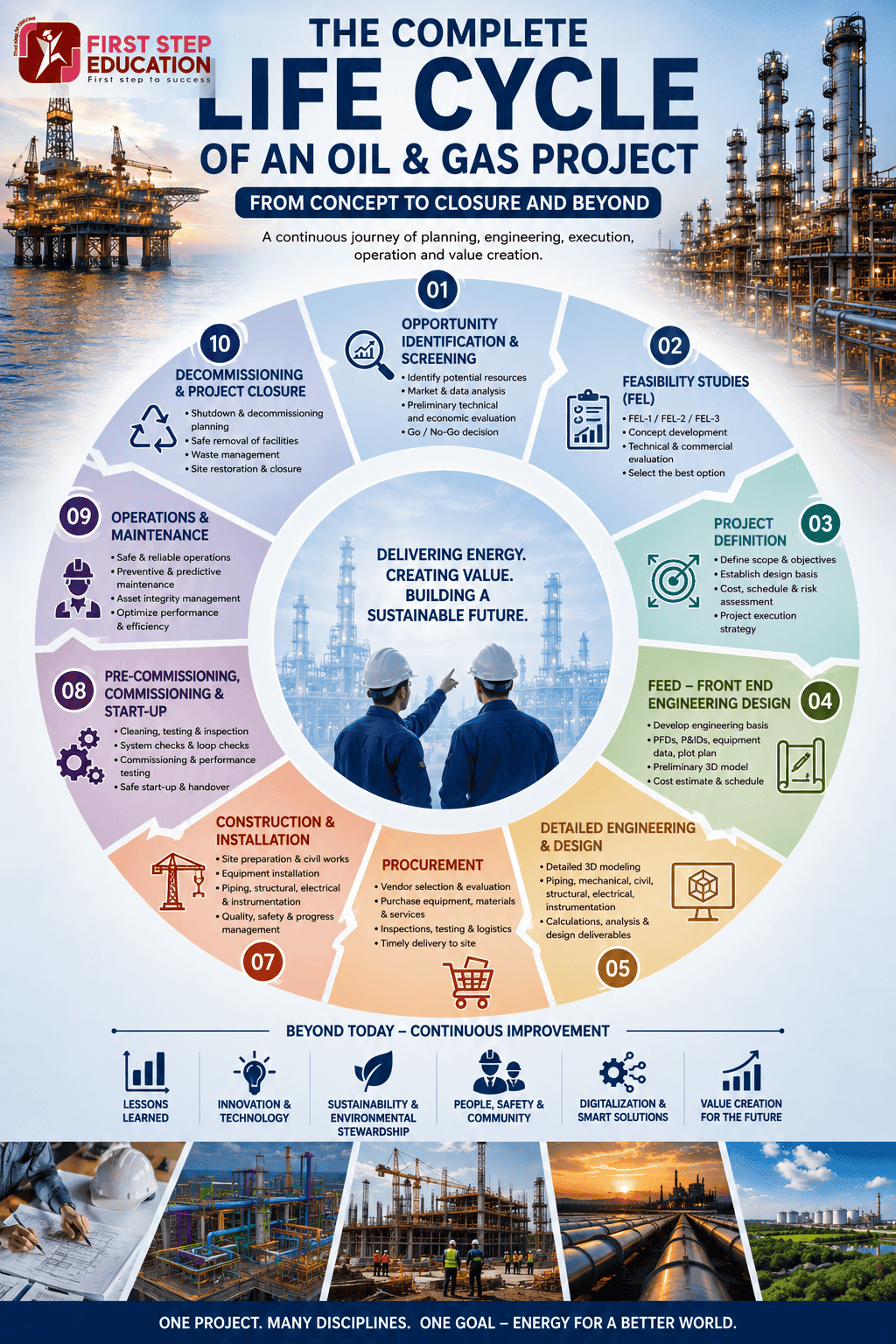
7. Construction and Installation
Once engineering, procurement, and material deliveries reach the required stage, construction begins or progresses significantly.
Construction converts engineering documents into a physical facility.
Depending on the project, activities can include:
Civil construction
- Site preparation
- Earthworks
- Foundations
- Roads
- Buildings
- Drainage
Structural construction
- Steel fabrication
- Pipe rack erection
- Equipment structures
- Platforms
- Access systems
Mechanical construction
- Equipment installation
- Vessel erection
- Pump installation
- Compressor installation
- Tank construction
Piping construction
- Pipe fabrication
- Spool fabrication
- Erection
- Welding
- Nondestructive examination
- Pressure testing
- Flushing and cleaning
- Insulation
- Painting
Electrical construction
- Cable tray installation
- Cable pulling
- Transformer installation
- Switchgear installation
- Earthing
- Lighting
Instrumentation construction
- Instrument installation
- Tubing
- Junction boxes
- Cable installation
- Control system installation
- Instrument calibration
Construction management
Construction must be controlled through:
- Safety management
- Quality management
- Schedule control
- Material management
- Inspection
- Progress measurement
- Permit-to-work systems
- Construction planning
The goal is not simply to construct the facility, but to construct it safely, correctly, and according to the approved engineering design.
8.Pre-Commissioning
Before hydrocarbons or process fluids are introduced into the facility, extensive testing and preparation must take place.
This is known as pre-commissioning.
Typical activities include:
- Cleaning
- Flushing
- Air blowing
- Chemical cleaning
- Hydrostatic testing
- Leak testing
- Electrical testing
- Cable testing
- Instrument calibration
- Loop checking
- Equipment inspection
- Motor solo runs
- System checks
The objective is to ensure that individual systems are mechanically complete and ready for commissioning.
Mechanical Completion
A system is considered mechanically complete when construction activities and required inspections for that system have been completed according to project requirements.
Documentation such as:
- Punch lists
- Inspection records
- Test certificates
- Pressure test records
- Calibration certificates
helps demonstrate completion.
9.Commissioning and Start-up
Commissioning bridges the gap between construction and operation.
During commissioning, systems are energized, tested, functionally checked, and placed into service.
Typical activities include:
- Energizing electrical systems
- Testing control systems
- Testing safety systems
- Introducing utilities
- Testing rotating equipment
- Checking process systems
- Testing interlocks
- Functional testing
- Performance testing
Eventually, the facility moves toward start-up.
Start-up
During start-up, the facility begins operating with process fluids or hydrocarbons.
Engineers and operators carefully monitor:
- Pressure
- Temperature
- Flow
- Vibration
- Equipment performance
- Process stability
- Safety systems
- Product quality
Start-up is one of the most critical stages because the facility transitions from a constructed asset into a live operating system.
10. Operations and Maintenance
Once the facility achieves stable operation, it enters its longest phase: operations.
An oil & gas facility may operate for decades.
During this stage, the primary objectives are:
- Safe operation
- Reliable production
- Asset integrity
- Efficient energy consumption
- Regulatory compliance
- Environmental performance
- Cost control
Maintenance activities
Maintenance can include:
Preventive maintenance
Planned maintenance performed at predetermined intervals.
Predictive maintenance
Maintenance based on equipment condition and monitoring data.
Corrective maintenance
Repair performed when a fault or failure is identified.
Turnaround maintenance
Major planned shutdowns for inspection, maintenance, repair, and modification.
Asset integrity
Asset integrity management is particularly important in oil & gas facilities.
Engineers monitor:
- Corrosion
- Erosion
- Fatigue
- Cracking
- Vibration
- Pressure equipment condition
- Pipeline integrity
- Structural integrity
- Safety systems
The goal is to ensure that equipment remains fit for service throughout its intended life.
11. Brownfield Modifications and Upgrades
The project life cycle does not necessarily stop when the facility begins operating.
Operating facilities frequently require modifications.
These projects are often called brownfield projects, while new facilities are generally referred to as greenfield projects.
Brownfield activities may include:
- Capacity expansion
- Debottlenecking
- Equipment replacement
- Pipeline modifications
- New tie-ins
- Process improvements
- Safety upgrades
- Emissions reduction projects
- Digitalization
- Energy-efficiency improvements
Brownfield engineering can be particularly challenging because the facility is often operating while modifications are being designed and installed.
Engineers must consider:
- Existing conditions
- Available space
- Live systems
- Shutdown requirements
- Tie-in points
- Existing drawings
- Constructability
- Safety
12. Decommissioning
Eventually, an oil & gas facility may reach the end of its economic or technical life.
The facility may be decommissioned because of:
- Declining production
- Aging infrastructure
- High operating costs
- Regulatory requirements
- Safety concerns
- Changes in market conditions
- Replacement by newer facilities
Decommissioning involves safely taking the facility out of service.
Activities may include:
- Shutdown planning
- Isolation
- Depressurization
- Removal of hydrocarbons
- Cleaning
- Disconnection
- Equipment removal
- Pipeline abandonment or removal
- Structural dismantling
- Waste management
For offshore facilities, decommissioning can involve complex subsea operations and environmental considerations.
13. Site Restoration and Project Closure
The final stage involves restoring the site as required by regulations, contractual obligations, and the approved decommissioning strategy.
Activities can include:
- Site cleanup
- Waste disposal
- Environmental remediation
- Removal of temporary facilities
- Restoration of land
- Final inspections
- Regulatory approvals
- Documentation and records closure
The project team also captures lessons learned.
These lessons can be valuable for future projects.
For example:
- What engineering decisions worked well?
- Which procurement activities caused delays?
- Which construction methods were effective?
- Where did design changes occur?
- What safety issues were identified?
- What could have been done differently?
This knowledge feeds into future projects and helps organizations continuously improve.